Source Modern Large Capacity Storage Box for Warehouses, Kitchens, Garages
Compare 30 listings for the modern large capacity storage box designed for kitchens, warehouses, and garages. Buyers can evaluate specifications like 60L volume, stackable features, and material options including PP and PET to find suitable solutions for storage and packaging needs.
Key considerations
Products List


Comprehensive Sourcing Guide
Modern Large Capacity Storage Box Sourcing Guide
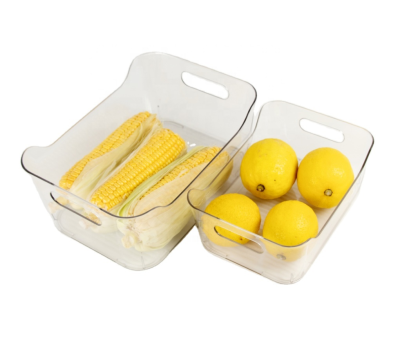
Procuring modern large capacity storage boxes requires a clear understanding of the diverse product landscape available from manufacturers, particularly those originating from major industrial hubs like Zhejiang, China. Buyers must distinguish between rigid, stackable crates designed for heavy-duty logistics and flexible, nestable containers intended for kitchen or retail freshness preservation. The market offers a wide spectrum of options, ranging from small, transparent PET bags for individual food items to substantial 60-liter plastic crates capable of supporting significant single and stacking loads. Understanding these fundamental differences is the first step in aligning procurement with specific operational needs, whether for warehouse organization, restaurant supply chains, or general household storage.
The selection process is further complicated by the variety of materials and design styles present in current listings. While some products utilize Polypropylene (PP) for its durability and chemical resistance, others may incorporate Polyethylene Terephthalate (PET) for clarity and rigidity. Design aesthetics also vary, with options spanning from industrial-style square boxes to more specialized shapes tailored for specific commercial environments like bubble tea bars or supermarkets. Buyers should carefully evaluate the intended use case, as the functional requirements for a garage stockroom differ significantly from those of a fast-food takeaway service. This distinction dictates the necessary features, such as nestability for space efficiency or stackability for vertical storage optimization.
Product Scope and Observed Listing Signals
Current market listings reveal a broad range of product attributes that signal different use cases and quality tiers. A significant portion of available inventory features PP bag packaging and transparent coloring, indicating a focus on visibility and cost-effective shipping for smaller items. These products often highlight features like freshness preservation and are marketed towards caterers, canteens, and specialty food stores. The presence of injection-molded technics suggests a standardized manufacturing process that ensures consistency in shape and durability. Buyers should note that while some items are labeled as "storage boxes," others are explicitly described as "moving nestable and stackable plastic crates," which implies a higher structural integrity suitable for transport and heavy-duty handling.
The observed specifications also point to a high degree of customization and versatility in the supply chain. Many suppliers offer a wide array of colors, including blue, grey, black, and red, allowing for color-coding systems in warehouse or retail environments. The availability of custom logos through silk printing, embossing, or hot stamping indicates that these products are frequently used for branding purposes in commercial settings. Furthermore, the mention of "Room Space Selection" support suggests that manufacturers can tailor dimensions to fit specific kitchen or storage layouts. Buyers must verify if the listed "11 sizes" cover their required volume capacities, which range from small 0-2L containers to large 60L units, ensuring that the selected product meets both spatial and volumetric requirements.
Technical Specifications to Verify
When evaluating technical specifications, buyers must prioritize load-bearing capabilities and dimensional accuracy to ensure operational safety and efficiency. For large capacity crates, it is critical to verify the single load and stacking load limits, as these metrics determine how much weight the container can safely hold individually and when stacked in a warehouse setting. In the observed data, some crates support a single load of 35kg and a stacking load of 175kg, which are substantial figures for industrial applications. Buyers should request detailed engineering drawings or test reports to confirm these limits, especially if the storage boxes will be used in automated systems or high-density racking where structural failure could lead to significant downtime or safety hazards.
Dimensional consistency and material thickness are equally important technical factors that influence storage density and product longevity. The standard dimensions of 585x365x340mm for certain crates provide a baseline for palletization and shelving compatibility, but buyers must confirm if these measurements include lid thickness or handle protrusions. Additionally, the nested height of 120mm for empty crates is a key metric for calculating return logistics costs and storage space during non-use periods. Buyers should also verify the material type, distinguishing between PP and PET, as each has different thermal and chemical resistance properties. Ensuring that the plastic type matches the intended environment, whether it involves cold storage or exposure to cleaning agents, is essential for maintaining product integrity over time.
Compliance and Safety Documentation
Compliance with international safety and environmental standards is a non-negotiable aspect of sourcing modern storage solutions, particularly for products that may come into contact with food or be used in regulated environments. Buyers should insist on documentation that verifies adherence to standards such as Reach, RoHS, and ISO9001:2000, which indicate that the manufacturer follows rigorous quality management and environmental protection protocols. These certifications are not merely formalities; they provide assurance that the materials used, such as PP or PET, are free from harmful substances and are suitable for their intended application. For food-related storage, additional verification of food-grade compliance may be necessary, even if not explicitly listed in every product description.
Warranty terms and defect liability policies are also critical components of the compliance framework. A standard three-year warranty, as observed in some listings, suggests a manufacturer's confidence in the durability of their products. However, buyers must carefully review the terms of this warranty to understand what constitutes valid coverage, such as manufacturing defects versus wear and tear from improper use. It is advisable to request sample units for independent testing before placing large orders, allowing the procurement team to verify that the physical product matches the certified specifications. This proactive approach helps mitigate the risk of receiving non-compliant goods and ensures that the supplier is accountable for the quality and safety of their output.
Cost Drivers and Commercial Terms
The cost of modern large capacity storage boxes is influenced by several key factors, including material costs, production volume, and customization requirements. The supply ability of 100,000 bags per month indicates that manufacturers have the capacity to handle large orders, which can lead to economies of scale and lower unit prices. However, buyers should be aware that prices can vary significantly based on the specific material grade, wall thickness, and additional features like reinforced edges or custom logos. The observed price range of 0.3 to 16,000 USD reflects the diversity of products, from small individual containers to bulk palletized orders of large crates. Understanding these variables is essential for accurate budgeting and cost comparison across different suppliers.
Commercial terms, such as Minimum Order Quantity (MOQ) and packaging details, also play a significant role in the total cost of ownership. MOQs ranging from 1 to 3,000 units allow for flexibility, but buyers must consider the storage and handling costs associated with larger orders. Packaging is typically done in PP bags or on pallets, which affects shipping efficiency and potential damage during transit. Buyers should negotiate clear terms regarding packaging standards to ensure that products arrive in optimal condition. Additionally, the port of dispatch, such as Ningbo, can impact logistics costs and lead times, so it is important to factor in freight charges and insurance when evaluating the final landed cost of the storage boxes.
Supplier Qualification and Quality Control
Supplier qualification is a critical step in ensuring a reliable supply chain for modern large capacity storage boxes. Buyers should conduct thorough due diligence on potential suppliers, verifying their business licenses, production capabilities, and past performance in similar industries. The presence of certifications like ISO9001:2000 is a positive indicator, but buyers should also assess the supplier's quality control processes, including incoming material inspections, in-process checks, and final product testing. Requesting references from existing clients, particularly those in the food and beverage or warehouse sectors, can provide valuable insights into the supplier's reliability and responsiveness. This due diligence helps mitigate the risk of supply chain disruptions and ensures that the supplier can meet consistent quality standards.
Quality control measures should be explicitly defined in the purchase agreement to protect the buyer's interests. This includes specifying acceptable defect rates, sampling procedures, and the right to conduct third-party inspections before shipment. Buyers should also establish clear communication channels for addressing any quality issues that arise after delivery. Given the potential for variations in plastic molding, it is advisable to request pre-production samples for approval before mass production begins. This step allows the buyer to verify that the product meets all specified requirements, including dimensions, color, and load-bearing capacity. By implementing robust quality control protocols, buyers can ensure that they receive storage boxes that perform as expected in their operational environments.
Long-Term Procurement Checks
Long-term procurement success depends on establishing a strategic partnership with suppliers that prioritizes continuous improvement and adaptability. Buyers should regularly review supplier performance metrics, such as on-time delivery rates, product quality consistency, and responsiveness to issues. This ongoing evaluation helps identify potential problems early and allows for corrective actions to be taken before they impact operations. Additionally, buyers should stay informed about industry trends and technological advancements in storage solutions, such as new materials or design innovations that could offer better performance or cost savings. Engaging in regular dialogue with suppliers about future needs and challenges can foster collaboration and lead to mutually beneficial solutions.
Sustainability and lifecycle management are increasingly important considerations in long-term procurement strategies. Buyers should inquire about the recyclability of the storage boxes and the supplier's efforts to minimize environmental impact during production. As regulations around plastic use become more stringent, having a supplier who is proactive about compliance and sustainability can provide a competitive advantage. Furthermore, buyers should plan for the end-of-life disposal or recycling of the storage boxes, ensuring that they align with corporate sustainability goals. By focusing on these long-term factors, buyers can build a resilient supply chain that supports their operational needs while contributing to broader environmental and social objectives.
FAQs
What is the volume capacity of the large storage box?
The large storage box offers a volume capacity of 60 liters, making it suitable for substantial storage needs. This capacity is ideal for organizing items in warehouses, garages, or stockrooms. The design supports efficient space utilization while maintaining structural integrity for heavy loads up to 175 kg when stacked.
Can the storage box be customized for branding purposes?
Yes, customization is available for the storage box to meet specific branding requirements. Buyers can choose from silk printing, embossing, or hot stamping to add logos or designs. This feature allows businesses to maintain brand visibility while utilizing durable, nestable, and stackable plastic crates for their operations.
What certifications does the plastic storage box hold?
The plastic storage box holds Reach, RoHS, and ISO9001:2000 certifications, ensuring compliance with international standards. These certifications verify the product's safety and quality management systems. Buyers can rely on these credentials for sourcing materials that meet regulatory requirements for commercial and industrial storage applications.
How much weight can the storage box support when stacked?
The storage box can support a stacking load of 175 kg, ensuring stability during vertical storage. It also handles a single load of 35 kg effectively. This robust load-bearing capacity makes it suitable for warehouse and garage environments where heavy items need secure and organized storage solutions.
What is the origin and supply ability for this product?
The product originates from Zhejiang, China, with a supply ability of 100,000 bags per month. This high production capacity ensures consistent availability for large orders. The dispatch port is Ningbo, facilitating efficient logistics for international buyers seeking reliable and scalable sourcing options for storage solutions.